 |
|||||||
| Home |
Tours |
Wildlife | Our region | Prices | About Araucaria |
Contact us |
Blog |
Animal
welfare
and wildlife tourism
See also
ecotourism, wildlife conservation
and environmental
education
webpages on welfare of wild animals local help for injured and orphaned wildlife
Anyone who has known the friendship of a
dog cannot
doubt that
non-human
animals share
some of our
feelings.
It's impossible to know exactly what they feel, but pleasure, pain, excitement, fear, anger, jealousy and affection appear to form a normal part of the lives of many creatures. Attempts to explain their behaviour while denying such sensations are often convoluted and unconvincing.
A interesting discussion can be found here on animal consciousness and feelings.
Where there is doubt as to the level of distress that may be caused, we choose to err on the side of caution and compassion.
Animal welfare is a separate issue which recognises the well-being of individual animals, whether or not there is a conservation issue involved.
 Conservation
and welfare
usually do go
hand in hand,
but some
decisions
however are
difficult.
Conservation
and welfare
usually do go
hand in hand,
but some
decisions
however are
difficult.
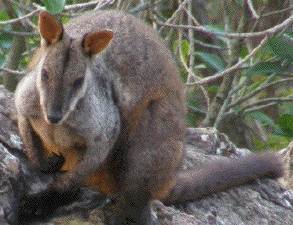
If an animal has been caught by a native predator but still alive and suffering, do we leave the predator to its meal or intervene to end the animal's pain? We do interfere in circumstances where the suffering threatens to be prolonged, such as if the predators are ants and it looks like the animal will take a long time to die but obviously still conscious. An animal bitten by a venomous snake on the other hand will soon succumb, and the snake does need a meal.
Although we do not normally feed any wildlife, if a long drought or a fire has left a shortage of resources, we would consider offering appropriate food and water to help them through a tough spell. After all, our own species has removed much wildlife habitat, so if there is a problem in one site they can not always simply move to another.
We help common animals - galahs, rainbow lorikeets, brushtail possums, noisy miners etc. - that are injured as well as rare ones, just as we would also help an injured dog or horse: they are still animals capable of suffering, regardless of conservation value.
Even though common animals such as eastern grey kangaroos or brushtail possums may not incur any conservation problems through being disturbed, we don't wish to cause distress by separating mothers from joeys or deterring the animals from using their favourite feeding grounds. So in the interests of both conservation and animal welfare, we generally aim to leave all animals doing whatever they were doing when we first sighted them.
 Animals
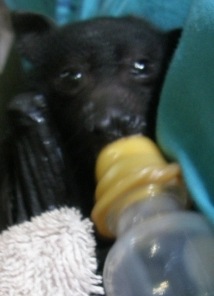
found injured on the road, young animals obviously
separated from parents etc. are taken to
carers or to a local veterinary
surgeon. Snakes, lizards and turtles may not
show their feelings as clearly as mammals and
birds but this is no reason to think they do
not suffer, and they are also quickly taken
to vets or carers if injured or ill.
Animals
found injured on the road, young animals obviously
separated from parents etc. are taken to
carers or to a local veterinary
surgeon. Snakes, lizards and turtles may not
show their feelings as clearly as mammals and
birds but this is no reason to think they do
not suffer, and they are also quickly taken
to vets or carers if injured or ill.
We have in the past also cared for injured and orphaned animals ourselves, but our erratic schedules with the tourism business make this very difficult.
We are members of Bat Conservation and Rescue and the Queensland Wildlife Rehabilitation Council. The Scenic Rim Regional Council has provided us with a tall ladder (held under the name of Scenic Rim Wildlife) - available for use by other rescuers, as Darren and Ronda have had problems with reaching fruitbats stuck in cocos palms.
The wildlife parks we visit on our tours
have an
excellent
reputation
both in animal
welfare and
conservation.
Some of our
guests have an
aversion to
keeping any
animal in
captivity, but
conservation
breeding can
help keep a
highly-endangered
species going
until such
time as we can
adequately
protect and
restore their
habitat an
re-introduce
them to the
wild (I prefer
walking
without
crutches, but
if I have a
badly-injured
foot I
appreciate the
crutches until
it heals). It
also provides
a good chance
for people to
have a
close-up look
and get to
know and care
about animals
they may never
see in the
wild.
Many animals
do appear to
adapt very
readily to
life in
captivity as
long as
conditions are
good.
We have refused work experience or employment to more than one person showing callousness towards animals (including invertebrates - swatting flies is acceptable, but a prospective employee who caught a fly, pulled its wings off, put it down and said "now let's see you fly" was not showing the kind of attitude we welcome here).
We do not buy products that are known to involve cruelty to animals or major conservation problems. We do not for instance buy palm oil products (it would be possible to harvest palm oil in a way that is environmentally sustainable and in keeping with animal welfare, but the continued encroachment on native forests results in the decline and suffering of orangutans and other tropical Asian species and it is often unclear as t whether the palm oil in a particular product is from a sustainable source), or egg or meat products that are not free-range. We haven't eaten pig products for years because of the tiny enclosures these very active-minded animals are restricted to throughout their lives, but have now found a source of RSPCA-approved free-range pig products, with a couple of outlets in Brisbane.
webpages on welfare of wild animals local help for injured and orphaned wildlife
 The
feelings of
animals
The
feelings of
animals
Anyone who has known the friendship of a
dog cannot
doubt that
non-human
animals share
some of our
feelings.
It's impossible to know exactly what they feel, but pleasure, pain, excitement, fear, anger, jealousy and affection appear to form a normal part of the lives of many creatures. Attempts to explain their behaviour while denying such sensations are often convoluted and unconvincing.
A interesting discussion can be found here on animal consciousness and feelings.
Where there is doubt as to the level of distress that may be caused, we choose to err on the side of caution and compassion.
Conservation and animal welfare
Wildlife conservation focuses on preserving species and not interfering with natural processes.Animal welfare is a separate issue which recognises the well-being of individual animals, whether or not there is a conservation issue involved.
Conservation
and welfare
usually do go
hand in hand,
but some
decisions
however are
difficult. If an animal has been caught by a native predator but still alive and suffering, do we leave the predator to its meal or intervene to end the animal's pain? We do interfere in circumstances where the suffering threatens to be prolonged, such as if the predators are ants and it looks like the animal will take a long time to die but obviously still conscious. An animal bitten by a venomous snake on the other hand will soon succumb, and the snake does need a meal.
Although we do not normally feed any wildlife, if a long drought or a fire has left a shortage of resources, we would consider offering appropriate food and water to help them through a tough spell. After all, our own species has removed much wildlife habitat, so if there is a problem in one site they can not always simply move to another.
We help common animals - galahs, rainbow lorikeets, brushtail possums, noisy miners etc. - that are injured as well as rare ones, just as we would also help an injured dog or horse: they are still animals capable of suffering, regardless of conservation value.
Even though common animals such as eastern grey kangaroos or brushtail possums may not incur any conservation problems through being disturbed, we don't wish to cause distress by separating mothers from joeys or deterring the animals from using their favourite feeding grounds. So in the interests of both conservation and animal welfare, we generally aim to leave all animals doing whatever they were doing when we first sighted them.
Injured and orphaned animals
Animals
found injured on the road, young animals obviously
separated from parents etc. are taken to
carers or to a local veterinary
surgeon. Snakes, lizards and turtles may not
show their feelings as clearly as mammals and
birds but this is no reason to think they do
not suffer, and they are also quickly taken
to vets or carers if injured or ill. We have in the past also cared for injured and orphaned animals ourselves, but our erratic schedules with the tourism business make this very difficult.
We are members of Bat Conservation and Rescue and the Queensland Wildlife Rehabilitation Council. The Scenic Rim Regional Council has provided us with a tall ladder (held under the name of Scenic Rim Wildlife) - available for use by other rescuers, as Darren and Ronda have had problems with reaching fruitbats stuck in cocos palms.
Pest animals
South American cane toads on our property are disposed of as swiftly and with as little trauma as possible for the sake of the local wildlife, many of which are poisoned by eating them. We cannot understand the view that these animals somehow deserve to be "punished'' for being here and that a slow and painful death for them is acceptable - they never asked to come here, and their pain is presumably no less real than that of native frogs.Other animal welfare considerations
We have refused work experience or employment to more than one person showing callousness towards animals (including invertebrates - swatting flies is acceptable, but a prospective employee who caught a fly, pulled its wings off, put it down and said "now let's see you fly" was not showing the kind of attitude we welcome here).
We do not buy products that are known to involve cruelty to animals or major conservation problems. We do not for instance buy palm oil products (it would be possible to harvest palm oil in a way that is environmentally sustainable and in keeping with animal welfare, but the continued encroachment on native forests results in the decline and suffering of orangutans and other tropical Asian species and it is often unclear as t whether the palm oil in a particular product is from a sustainable source), or egg or meat products that are not free-range. We haven't eaten pig products for years because of the tiny enclosures these very active-minded animals are restricted to throughout their lives, but have now found a source of RSPCA-approved free-range pig products, with a couple of outlets in Brisbane.
Sample of web pages on welfare of wild animals, including some debates. See for instance:
- Right
Tourism investigates the effects of
different
kinds of
tourism on
animal welfare
and offers
guidelines to
travelers
- pages from the journal Animal People
- a ..PDF of an article by Chris West, director of Adelaide Zoo, on animal welfare and wildlife conservation, including some conflicts between these
- Seminar by RSPCA Convergence or conflict: Animal welfare in wildlife management and conservation.
- Animal rescue organisations and permits in South Australia
- Wildlife friendly fencing (many wild creatures are badly injured each year on fences)
- Jane Goodall Institute (has both welfare and conservation aspects)

 Sites related to helping local
wildlife include:
Sites related to helping local
wildlife include:
- RSPCA wildlife rescue - CALL 1300 ANIMAL
- Wildcare Australia
- ONARR
(Orphaned
Native Animal
Raise &
Release
Association
Inc.
- WIRES (NSW
Wildlife
Information
Rescue and
Education
Service Inc)
- Bat Conservation
and Rescue,
Brisbane
- Wildlife Warriors hospital at Adelaide Zoo
- Currumbin Wildlife Sanctuary Veterinary Hospital
- Helping wildlife following wildfire. Zoos Victoria
- Queensland Wildlife Rehabilitation Council